The Silence Between Rolls: What Your Table Isn't Saying and Why You Need to Listen
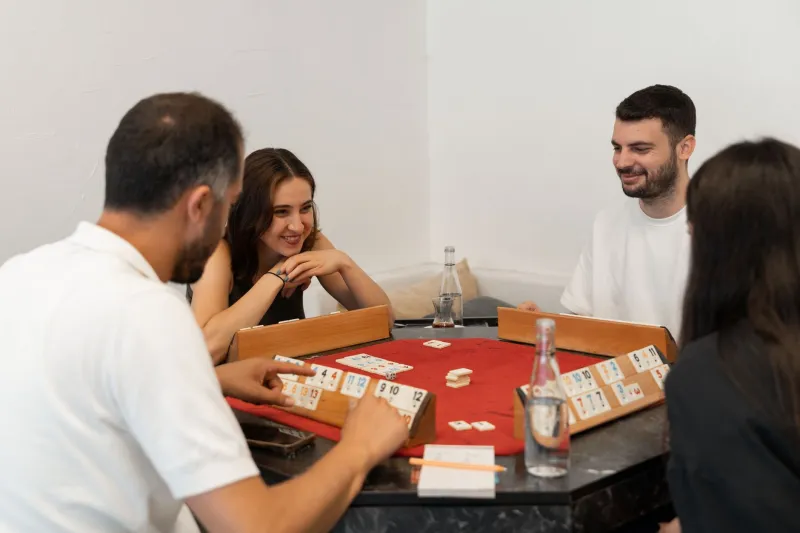
There's a moment most GMs have experienced and never quite know what to do with. You've just delivered what you thought was a compelling scene — a dramatic NPC death, a major revelation, a moral dilemma with no clean answer. You look up expecting reactions. And you get... nothing. Phones stay face-down on the table. Nobody reaches for their dice. Someone pours more soda and stares at the ceiling.
Is that good? Bad? Did they not care? Are they overwhelmed? Are they bored?
Reading silence at the gaming table is genuinely hard, and most GM advice skips right over it. We talk a lot about what to do when players are loud — when they argue, when they derail, when they clash. But we don't talk nearly enough about what to do when the table goes quiet in ways that feel off. That gap in our toolkit costs campaigns.
Not All Silence Is the Same
Before you diagnose anything, it helps to recognize that silence comes in very different flavors.
Contemplative silence is what you want. It's the pause after a hard choice lands, when players are genuinely sitting with the weight of what just happened. You can usually feel this kind of quiet — it has a texture to it, almost like the room is holding its breath. People make eye contact with each other. Someone might say "wow" under their breath. This silence is the highest compliment a GM can receive.
Decision silence is equally healthy. It's what happens when your players are actually thinking through a problem — weighing options, doing mental math, whispering strategy. The energy is focused inward. This is your world working exactly as intended.
Disconnected silence is the one you need to watch for. It's characterized by scattered attention — people checking phones, doodling without engagement, giving one-word answers when they'd normally be enthusiastic. The energy doesn't feel focused; it feels absent. This is your early warning system.
Uncomfortable silence is rarer but more urgent. It shows up after a moment that hit wrong — a scene that went darker than expected, a joke that landed badly, an NPC interaction that made someone visibly tense. This silence has a distinct social awkwardness to it. People avoid eye contact. The energy is careful rather than absent.
Learning to tell these apart is the whole game.
The Exchanged Glance Problem
Here's a specific signal that a lot of GMs miss: the look that two players share when something happens at the table.
Some of those looks mean oh that was cool, right? — a shared moment of delight that you absolutely want to encourage. But some of those looks mean are we feeling this too? — a silent check-in between players who are all experiencing the same friction and haven't said anything out loud yet.
If you notice the same two or three players exchanging glances repeatedly during a session — especially during transitions, during NPC interactions, or right after major plot moments — pay attention. They're communicating something to each other that they haven't figured out how to say to you yet. That's not accusatory; it's just human. We process sideways before we process directly.
The worst thing you can do is ignore it and hope it resolves itself. The second worst thing is to call it out loudly in the middle of the session in a way that puts people on the spot. What actually works is creating low-pressure space — after the session, in a group chat, or through a quick check-in — where that unspoken thing can surface without anyone feeling defensive.
Pacing Problems Show Up in Silence First
One of the most reliable things disconnected silence tells you is that your pacing has drifted. Players disengage before they complain — the silence is the first symptom, and the complaint (if it comes at all) is much later.
Specifically, watch for quiet during:
Extended exposition. If you've been talking for more than a few minutes without a player making a choice or taking an action, attention will wander. This isn't a criticism of your lore — it's just how brains work. The fix is to break exposition into interactive chunks. Give them something to respond to, even if it's small.
Repetitive encounter structures. When players have seen the same basic shape of encounter multiple times — show up, fight, loot, move on — the novelty wears off and the silence that settles in is a kind of low-grade boredom. They're not checked out on you, they're checked out on the pattern. Disrupting the pattern, even slightly, resets their engagement.
Unclear stakes. If players don't know what they're fighting for in a given scene — what they stand to gain or lose — they'll disengage. The silence here is a symptom of confusion, not disinterest. Clarifying what's on the line, even mid-scene, can bring people back immediately.
What to Do in the Moment
When you notice disconnected silence spreading at your table, you have a few real-time options.
The redirect question. Pick the player who seems most checked out and ask them something specific about their character. Not a test — something that genuinely invites their perspective. "Hey, how is Mira feeling about what just happened?" pulls someone back in without singling them out as the problem.
The pace shift. If the scene has been slow, introduce a small disruption — a noise outside, an NPC arriving unexpectedly, a minor complication. You're not derailing your story; you're changing the energy. Physical movement at the table helps too. Stand up, move your miniatures, pull out a prop.
The honest pause. Sometimes the most effective thing is just stopping and saying, "Hey, I'm reading the room and I'm not sure this scene is landing the way I hoped — what's everyone thinking?" It feels vulnerable, but it almost always snaps people back to full presence and opens a conversation that improves the campaign.
After the Session: The Real Diagnostic Window
The most valuable information about what your table's silences meant usually comes out after the session ends — in the parking lot, in the group chat, over the post-game recap. Pay attention to what people bring up spontaneously versus what they don't mention at all.
If nobody talks about a scene you worked really hard on, that's data. If the conversation circles back to one moment three times, that's data too.
The table is always communicating. Your job as GM isn't just to run the game — it's to listen to the whole room, including the parts that never make a sound.