When Players Dig Deeper Than You Planned: Turning Chaotic Curiosity into World-Defining Discovery
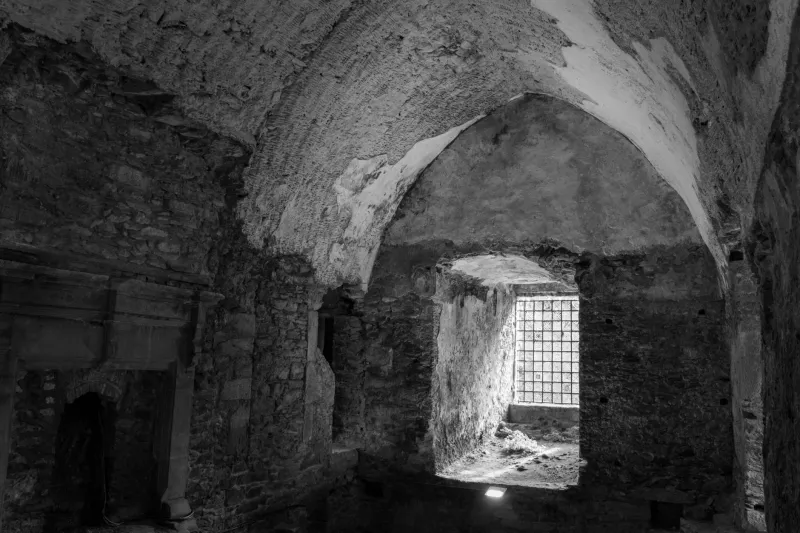
You know the moment. You're describing a crumbling watchtower, trying to set the scene before the ambush you've been building toward for three sessions. You mention, almost offhandedly, that the stonework has an unusual symbol carved above the doorway. You move on. Except one of your players doesn't move on. They ask to examine it. They roll Investigation. They roll high.
And now you're staring at your notes, which contain exactly zero information about that symbol, wondering how you got here.
Here's the thing: that moment isn't a crisis. It's an opportunity. Some of the most memorable worldbuilding doesn't come from the lore you carefully typed into a Google Doc at midnight — it comes from the spaces between your preparation, the gaps your players pry open with their curiosity. Learning to work with that chaos instead of against it is one of the most valuable skills a GM can develop.
The Myth of the Perfectly Contained Setting
There's a tempting fantasy in worldbuilding where everything is accounted for. Every faction has a backstory, every ruin has a name, every strange artifact has an origin. And while deep preparation is genuinely useful, it can also create a kind of rigidity — a feeling that your world only exists where you've already looked.
The truth is that a living world has more texture than any single GM can fully document. Real places have layers. History accumulates in weird, contradictory ways. Your setting should feel the same. When players start poking at corners you haven't lit up yet, that's not a failure of your prep — that's your world behaving like a real place.
The goal isn't to have every answer ready. The goal is to have a framework that lets you generate answers that feel consistent and earned.
Seed First, Explain Later
One of the best habits you can build as a GM is what some folks call "seeding without a harvest plan." The idea is simple: drop interesting details into your world without necessarily knowing what they mean yet. A faded crest on a merchant's wagon. A name that keeps appearing in old documents. A style of architecture that doesn't match the region. A local superstition that nobody can explain.
These details cost you almost nothing to place. But when a player latches onto one and starts pulling the thread, you suddenly have raw material to work with. You're not inventing from scratch — you're interpreting something that already exists in your world. That shift in framing makes improvisation feel less like panic and more like excavation.
The key is to make your seeds feel intentional even when they aren't. Consistency matters more than completeness. If that strange symbol shows up again two sessions later in a completely different location, players will assume you planned it all along. And honestly? By that point, you kind of did.
Rewarding Thoroughness Without Punishing the Plot
One of the real tensions in tabletop RPGs is between player agency and narrative momentum. You've got a story you're trying to tell, and sometimes your players want to spend forty-five minutes interviewing a blacksmith about regional metallurgy instead of following the urgent distress signal you planted at the end of last session.
The instinct is to redirect — to gently (or not so gently) steer them back toward the main road. And sometimes that's the right call. But before you do, ask yourself: what are they actually looking for?
Players who dig into background details are usually doing one of two things. Either they're genuinely enjoying the texture of your world, or they're trying to find information they think they need. Both of those impulses deserve respect. The first is a compliment to your setting. The second is a signal that your players feel like the world has secrets worth uncovering — which is exactly the feeling you want.
When you can, reward the detour. Let the blacksmith know something. Let that Arcana roll on the doorway symbol reveal a faction name that becomes relevant three sessions from now. You don't have to give everything away — in fact, partial information is often more exciting than a complete answer. A player who learns that the symbol belongs to an order called the Ashen Compact and that the locals get visibly nervous when it's mentioned has just been handed a mystery, not a solution. That's a gift.
Improvising Lore That Holds Up
So your player rolled a 19 and now they need an answer. Here's a quick framework for generating lore on the fly that won't contradict itself later:
Anchor it to something you already know. If there's a fallen empire in your world, the symbol probably connects to it. If there's a magical catastrophe in your history, maybe this is a remnant. Existing lore is your scaffolding.
Give it a function, not just a fact. Instead of "this symbol means X," try "this symbol was used by people who believed X." The belief angle gives you flexibility — it can be true, partially true, or a myth that's more interesting than the reality.
Leave a loose end. The best improvised lore ends with a question, not a period. Your players found out what the symbol is. They don't yet know why it's here or who put it there. That's your next hook.
Write it down immediately. Seriously. The moment your session ends, document whatever you invented. Future-you will be grateful, and your world will feel more coherent for it.
The Accidental Archaeologist Is Your Best Player
There's a certain type of player at every table — the one who reads the room description twice, who asks about the books on the shelf, who wants to know the name of the innkeeper's dog. They're not trying to derail your game. They're trying to inhabit it.
These players are doing something valuable: they're treating your world like it's real. And the best way to honor that instinct is to make sure the world rewards it. Not every detail needs to lead somewhere. But enough of them should that the act of looking feels worthwhile.
When your players start digging in places you didn't prepare, don't panic. Take a breath. Think about what fits. Improvise with confidence, anchor your answers to your existing lore, and leave yourself room to expand later. The lore they uncover in those unplanned moments often ends up being the lore they remember longest — because they found it, rather than being handed it.
That's the magic of a world that breathes. It surprises even the person who built it.