Off the Beaten Path: How Your Campaign's Throwaway Moments Become Its Greatest Hits
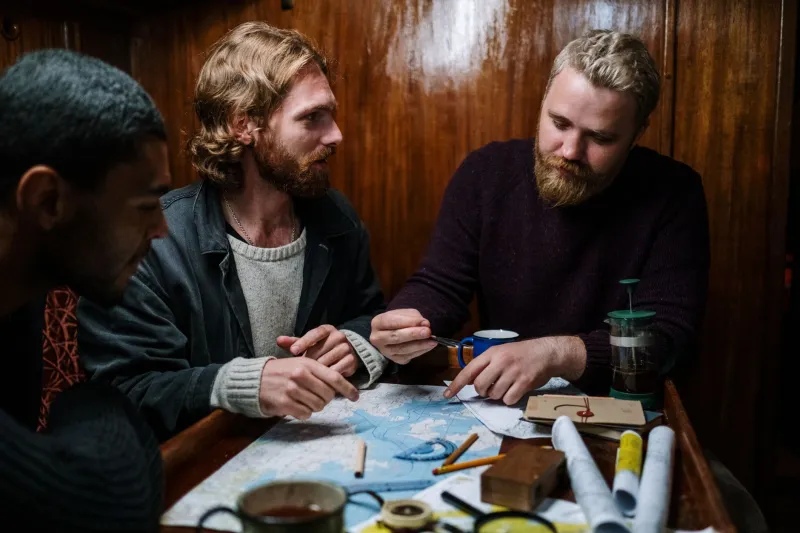
You know the moment. You've poured hours into a dungeon crawl — keyed rooms, trap placement, a boss fight you've been quietly hyping for three sessions. Then, on the way there, one of your players asks the random stable hand if he's ever seen anything strange near the old mill. You improvise a name. Maybe a nervous laugh. A vague answer about lights in the fog.
Two months later, that stable hand has a name, a tragic backstory your players invented themselves, and a hand-drawn portrait someone made between sessions.
This is the secret life of a tabletop RPG campaign. The stuff that hits hardest almost never comes from the parts you planned.
Why the Margins Hit Different
There's a reason those unscripted detours stick with people. When players wander off the main road, they're not following a story — they're making one. The moment your party decides to spend an hour interrogating a fisherman who was supposed to be set dressing, they've claimed ownership over that interaction. It becomes theirs in a way a scripted cutscene never could be.
Psychologically, we remember experiences more vividly when they surprise us. At the table, that translates to the unexpected tavern argument, the side street chase that wasn't on any encounter table, the NPC who said something a little too honest at the wrong moment. These moments catch players off guard, and that surprise creates emotional texture that planned content often can't replicate.
As a GM, your job isn't just to build the world — it's to be present enough to recognize when the world is building itself.
The Trap of Over-Scripting
Here's where a lot of GMs get tangled up: they treat the main plot like a highway and everything else like a detour. The instinct is understandable. You've got a story to tell, a villain with a ticking clock, and players who sometimes need a nudge to stay on task. So when the party veers off, it can feel like lost time.
But over-scripting your campaign creates a kind of invisible tension at the table. Players can feel when the world only responds to the "right" choices. When every side street is a dead end and every NPC outside the quest line has nothing interesting to say, players stop poking at the edges. They stop being curious. And curiosity is the engine that makes tabletop RPGs sing.
The fix isn't to abandon your main plot. It's to stop treating everything outside it as filler.
Practical Ways to Let the Margins Breathe
Keep a loose NPC bench. You don't need full backstories for every face in the crowd, but having a running list of names, quirks, and one-line hooks means you're never caught flat-footed when a player decides to befriend the blacksmith's apprentice. A name and a nervous habit are enough to make someone feel real. Let the players fill in the rest.
Treat player-invented lore as canon. When your players start theorizing about that stable hand's connection to the lights in the fog, don't shut it down — lean in. Incorporate their theories into what actually happened. You'll never write anything more satisfying to your specific table than the story they're already half-telling themselves.
Use the "yes, and" principle from improv. When a player takes an unexpected turn, your first instinct should be to find a way to make it interesting rather than redirect them back to the main road. "Yes, and" doesn't mean every side quest leads to treasure. It means the world responds meaningfully to what your players care about.
Plant seeds, not signs. Instead of railroading players back to the plot, let the main story bleed into the margins. That fisherman? Maybe he has seen the lights — and maybe they're connected to your villain's operation in a way you hadn't planned yet. Now the detour isn't a distraction. It's a new thread in the same tapestry.
Holding the Thread Without Gripping Too Tight
The real skill here is momentum management. Letting organic moments breathe doesn't mean your campaign has to sprawl into chaos. It means learning to distinguish between a detour that's generating genuine energy and one that's just stalling.
If your players are leaning in, asking questions, and building on each other's ideas — that's energy worth following. If they're spinning their wheels or getting frustrated, that's your cue to gently steer without slamming the wheel.
One useful trick: give every unplanned thread a natural endpoint within the session. If your players spend an hour on an unexpected subplot, let it resolve — or at least reach a satisfying pause point — before the night ends. That way it feels like a complete story beat rather than an abandoned thread. Players leave feeling like they accomplished something, even if it wasn't what you originally planned.
The Campaign You Didn't Plan Is Still Your Campaign
Here's the thing about those throwaway moments that become legendary: they don't happen despite your preparation. They happen because of it. Because you built a world rich enough that a stable hand could feel like he had secrets. Because your players trusted the table enough to follow their curiosity somewhere unexpected. Because you were present enough to catch the spark and fan it instead of stamping it out.
The best campaigns aren't the ones that went exactly according to plan. They're the ones where the GM and the players built something together that neither of them could have built alone — half of it written in prep, half of it scrawled in the margins during a session that went completely sideways in the best possible way.
So the next time your party ignores the quest board and wanders into the harbor district on a hunch, take a breath. Put your notes to the side. Ask them what they're looking for.
You might be about to run the best session of the whole campaign.