One Afternoon, Endless Atmosphere: A GM's Starter Kit for Soundtracks and Ambience
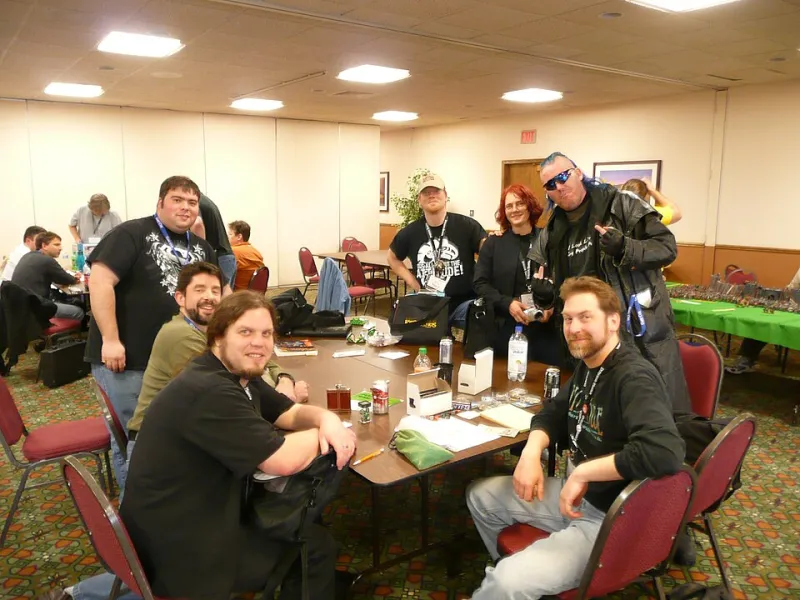
Photo: Nicole Hill, CC BY-SA 4.0, via Wikimedia Commons
Music won't save a bad session. But the right track at the right moment can turn a good one into the kind of night people talk about at work the next Monday.
The good news: you don't need to be an audio nerd. You need one afternoon, a free streaming account, and a bit of folder discipline. Here's the whole system.
Step 1: Build Five Core Playlists
Don't try to score every scene. Start with five moods that cover 90% of play:
- Explore — curious, moving, low-stakes. Think ambient folk, solo piano, game soundtracks like Journey or Slay the Spire.
- Town — warm and social. Acoustic, a little lively, nothing that demands attention.
- Tension — slow-building drones, ticking percussion. This is your investigation-and-negotiation playlist.
- Combat — driving rhythm, orchestral hits. Two Steps From Hell works, but so does darker electronic stuff.
- Dread — near-silence, low frequencies, unsettling textures. Save it. Rare use makes it land.
Keep each playlist 60–90 minutes so nothing loops noticeably during a session.
Step 2: Add Two or Three Ambience Loops
Ambience is different from music — it's weather, not melody. Grab free loops for the locations your party actually visits: a tavern with low murmur and clinking mugs, rain on a roof, a forest at night, a dungeon drips-and-echoes track. Sites like Tabletop Audio and Sword Coast Soundscapes offer free, loopable tracks built exactly for this.
Rule of thumb: ambience underneath, music on top, never two melodies at once. If your tavern music fights your tavern murmur, drop the murmur to a whisper volume or cut it.
Step 3: Learn the Volume Rule Nobody Follows
Here's the mistake almost every GM makes: the music is too loud. It should sit under the voices — if a player leans in to hear the NPC, turn it down. A track players barely notice is doing its job. A track they're listening to is stealing your scene.
The Pitfalls That Kill Suspense
- Over-scoring fights. If every combat gets the epic track, epic stops meaning anything. Match the music to the stakes, not the initiative count. A bar brawl deserves a honky-tonk; save the choir for the dragon.
- The wrong track at the wrong time. A mournful piece during a comedic scene flattens the humor instantly. When in doubt, go quieter rather than wronger.
- Cue-hunting mid-session. Nothing murders pacing like a GM scrolling Spotify for four minutes while players check their phones. Pre-load everything. If it's not in a playlist, it doesn't get played.
- Tech chaos at the table. One device, one person controlling it (usually the GM), one Bluetooth speaker with a tested battery. Do a five-minute sound check before players arrive, not during.
Your Afternoon Checklist
- Create five mood playlists (60–90 min each)
- Download 3–5 free ambience loops for your most common locations
- Pick one transitional track — the song that means "we're switching scenes"
- Set up a single speaker and test volume at conversational distance
- Make a one-page "sound sheet" listing what plays when, so you never improvise mid-game
When to Go Silent
The most powerful tool in your kit costs nothing: silence. Cutting the music entirely right before a reveal makes the room drop into stillness — and that stillness is louder than any sting.
Build the kit once, run it forever, and let the atmosphere do the heavy lifting while you do what you do best: telling the legend.