The Session Zero You Ran and the One You Actually Needed
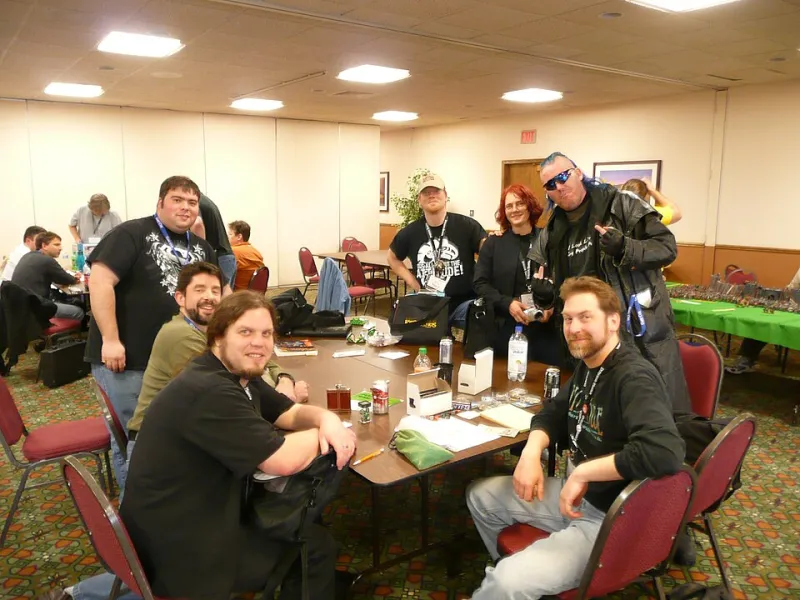
Photo: bander.bramblegrub, CC BY-SA 2.0, via Wikimedia Commons
Let's be honest with each other for a minute, because this is a hobby site and that's what we're here for.
You ran a Session Zero. Great. You asked about content boundaries, tone, scheduling, the works. Maybe you used a form. Maybe you had a nice conversation over Discord. And then, four months into the campaign, you ran a betrayal arc nobody signed off on, or you escalated the body horror past anything you discussed, or you leaned hard into a moral bleakness you promised — to yourself, mostly — you'd keep in check.
If that sounds familiar, you're not a monster. But you might have fallen into one of the traps below.
Lie #1: 'I'll Keep It Light'
This is the big one, and I've said it myself. You tell your table the campaign will be a fun romp — episodic, low-stakes, cozy. Then the story finds its legs, and the themes you actually wanted to explore come creeping in. That's not automatically a betrayal of trust! Themes evolve. But there's a difference between an organic deepening and a bait-and-switch. If your players signed up for a heist comedy and you're running them through a war crimes simulator by session ten, the problem isn't your tone — it's that you never went back and renegotiated.
The fix is embarrassingly simple: a two-minute check-in. 'Hey, the story's heading somewhere darker than where we started. Still good?' That's it. That's the whole tool.
Lie #2: 'They Won't Mind a Betrayal Arc'
Betrayal is one of the most beloved tropes in fiction and one of the most radioactive things you can do at a table without consent. The reason is mechanical, not moral: in a novel, the reader experiences betrayal from the outside. At your table, betrayal often means the GM used the players' own trust in the GM as a weapon. An NPC they loved, a patron they relied on — revealed as a lie you authored the whole time.
Some tables love this. Some players will talk about that twist for a decade. But those players told you they'd love it, explicitly or implicitly, and you listened. If nobody said they wanted it and you did it anyway because it would be cool, you spent trust you didn't own.
Lie #3: 'Boundaries Are for Content I Don't Plan to Use Anyway'
This one's subtler. You ask about lines and veils, everyone gives answers, and privately you think, 'None of that comes up in my campaign.' Then the campaign grows. The plot twists toward a topic somebody flagged. And now you're in the position of deciding, mid-session, whether their stated boundary was more of a suggestion.
It wasn't a suggestion. It was data about a real person at your table. Treat it like a load-bearing wall, not a note in the margin.
Lie #4: 'Nobody Objected, So Everyone's Fine'
Silence is not consent, especially in a hobby where social dynamics run through a power gradient. The GM controls the world; players control their characters and not much else. A player who seems fine may simply not want to make it awkward. If you want real information, you have to make it cheap to give: anonymous check-ins, a standing 'the X card is always valid' reminder, or the genuinely underrated move of going first — 'Hey, I pushed the torture scene harder than I meant to last week. Anyone else feel that way?'
The Agreements Are Alive
Here's the reframe that changed how I run games: Session Zero isn't a contract signed once. It's the first draft of an agreement that the campaign will keep editing. People change. Tables change. The story you thought you were writing in September isn't the story you're writing in March.
The GMs players trust for years aren't the ones who ran a perfect Session Zero. They're the ones who went back to the table — the literal table — whenever the deal changed, and asked again.