The Dice Don't Owe You Anything: Confessions of a Recovering Fate-Hugger

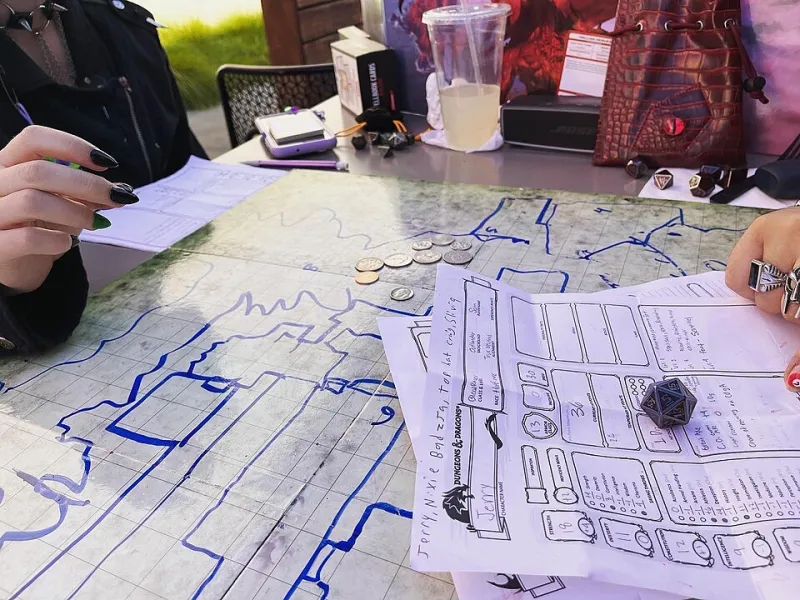
Photo: d20 dice rolling on wooden table dramatic lighting, via i.pinimg.com
Let me start with a confession, because recovery starts with honesty: I was a fate-hugger for the better part of a decade.
If the dice threatened my story, I quietly rerolled them. If the party's wizard ate a crit from a random goblin, the goblin suddenly rolled a 4. If the bard botched the negotiation that was supposed to unlock the second act, well — maybe the DC was actually a 12, not a 17. Nobody at the table ever knew. I told myself it was craft. It was actually fear.
The Story I Was Protecting Didn't Exist
Here's the thing I finally figured out: the "story" I was protecting was a rough draft. It lived in my notes and my head, and it was precious to exactly one person at the table — me. The actual story, the one my players carried home and texted each other about, was being built live, out of the rolls I kept vetoing.
The moment that broke me happened during a heist arc. My rogue — a player who'd been quietly underperforming all campaign — rolled a natural 1 on the escape, knocking over a rack of alchemical supplies and triggering a fire that burned down half the district. Every instinct I had screamed reroll it, this derails everything.
I let it stand. That fire became the centerpiece of the next six sessions. Three years later, that player still brings it up. I have never once heard anyone reminisce about the boss fight I softened.
What the Ugly Rolls Are Actually Buying You
The critical miss, the botched persuasion, the save that fails by two — these moments do work that no amount of GM preparation can fake:
- They prove the stakes are real. Players can smell a rigged table. The moment they believe the dice can hurt them, every success gets sweeter.
- They hand players ownership. A failure the GM engineered is the GM's story. A failure the dice delivered belongs to the player — and players defend their own disasters forever.
- They generate plot you couldn't plan. The best complications come from outcomes nobody at the table wanted. That's not a bug. That's the engine.
A Framework for Letting the Bones Fall
I'm not here to tell you fudging is always wrong — the dice are a tool, not a deity. But if you're going to intervene, do it on purpose. Here's the test I run before I touch a die:
1. Is this outcome boring or is it just inconvenient? A boring result (a trivial fight drags on) can be adjusted. An inconvenient one (the party loses the MacGuffin) is usually where the good material lives. Fix boredom. Keep the inconvenience.
2. Would this kill a player's investment, or just their character's pride? Random death with zero buildup can hollow out a table. A humbling failure almost never does. Be honest about which one you're preventing.
3. Am I doing this in the open or in the shadows? If you're going to fudge, consider being transparent about it in session zero: "I may occasionally adjust rolls for pacing, and I'll tell you when." Some tables will say never do that — respect it. Others will thank you. Secrets rot; agreements hold.
4. What story am I protecting, really? Name it. If you can't articulate why this specific outcome ruins something specific, you're not protecting a story. You're protecting your ego's rough draft.
The Retell Rule
Here's my favorite gut-check, learned the hard way: players retell surprises, not scripts. Nobody recounts the scene that went exactly as planned. They recount the halfling who tripped into the pit, the diplomacy check that turned a warlord into a pen pal, the fire that started it all.
If you want your campaign to generate legends, you have to let the dice generate material. Roll in the open. Take the hit. Trust the table.
The dice don't owe you anything — and that's exactly why they're worth trusting.