Look Past the Shire: World Folklore That Will Wake Up Your Homebrew
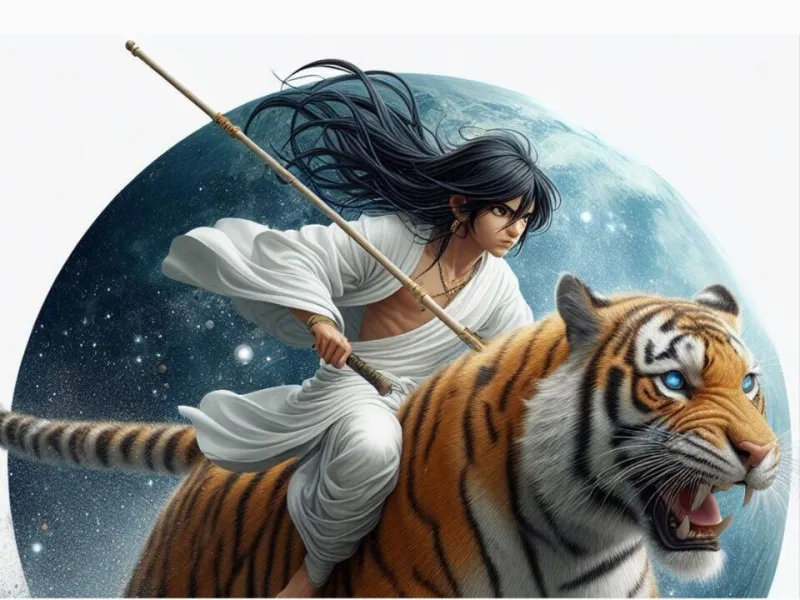
Photo: Author: DALL-E; prompted by Haoreima, Public domain, via Wikimedia Commons
There's nothing wrong with ye olde tavern fantasy. Some of us have been running it happily for twenty years. But if every village in your world has a blacksmith named something like Aldric and a forest full of generic sprites, you're drawing from an incredibly narrow slice of the world's actual storytelling traditions — and your players can feel it, even if they can't name it.
Here are nine traditions worth studying. The goal isn't to costume your setting in somebody else's mythology — it's to let different logics of the supernatural reshape how your world works.
1. Slavic House Spirits (Domovoi)
The domovoi is a household guardian who lives behind the stove and takes the family's fortunes personally. Fed, respected, kept happy — the household thrives. Offended — milk sours, tools vanish, luck turns.
The worldbuilding move: make the supernatural domestic. Imagine a setting where every homestead has a spirit with opinions, and treating your house spirit well is as routine as paying rent. Adventurers aren't special for knowing about spirits; everyone negotiates with them daily.
2. Filipino Aswang
The aswang is less a single monster than a category of shapeshifting predators embedded in ordinary life — the quiet neighbor, the new butcher in town. They're detected by folk methods and feared for how well they pass.
The worldbuilding move: paranoia as social texture. A world where anyone might be something else changes how villages behave — who's welcome at night, which professions are suspect. That's rich roleplay fuel that doesn't require a single combat.
3. Appalachian Haints
Appalachian folklore — a blend of Scots-Irish, Cherokee, and African American traditions — treats the dead and the uncanny as neighbors. Haint blue paint on porches, stories told plain and personal, the woods as a place with rules.
The worldbuilding move: the supernatural as rural common sense. Not hidden, not explained — just managed, generation to generation, through practical custom. Your players' characters grew up with this too.
4. Japanese Yokai Logic
Yokai often embody a specific place, feeling, or object — a bridge, an old lantern, the loneliness of a mountain pass. Many aren't evil; they're particular.
The worldbuilding move: assign a spirit to your locations and objects. The bridge your players keep crossing? It has a disposition. The lantern in the abandoned shrine? It remembers.
5. West African and Diaspora Tricksters (Anansi)
Anansi the spider wins through wit, appetite, and audacity — often against powers far bigger than himself. Stories about him are also stories about how the powerless survive.
The worldbuilding move: make cleverness the highest virtue in at least one culture. Honor codes, trickster heroes, riddles as currency — a society that admires the con as an art form will clash beautifully with your knightly cultures.
6. Norse Fate and Oath Culture
In the Norse material, even the gods are bound by oaths and woven fate. Words spoken formally have weight; breaking them is cosmic, not just rude.
The worldbuilding move: make promises mechanically and socially real. A world where a sworn oath has visible consequences turns every negotiation into a high-stakes scene.
7. Mesoamerican Cyclical Time
Several Mesoamerican traditions conceive of history in great recurring ages — worlds that rise, are destroyed, and begin again.
The worldbuilding move: build ruins that are previous worlds, not just older ones. The dungeon under the city isn't from a lost kingdom; it's from the last world, and the calendar says the current one has a due date.
8. Celtic Geasa
Related to oaths but more personal: the geis is an individual taboo or obligation — a hero who must never eat crow meat, never refuse hospitality, never break a specific promise. Heroes are defined by their constraints.
The worldbuilding move: give your players' characters folk-taboos at creation. Voluntary, flavorful, and a roleplay engine that never needs a rulebook.
A Note on Doing This Respectfully
Two quick rules. First, adapt themes and logics, not sacred specifics — you're writing fantasy inspired by living traditions, not retelling someone's religion. Second, when a tradition belongs to a real community (especially marginalized ones like the Gullah or many Indigenous nations), read sources by people from that community, and consider whether your adaptation honors or flattens it.
The Shire will still be there when you get back. But your players will remember the world where the houses had opinions and the calendar was counting down.