Stop Letting Your Villain Be Wrong About Everything — Your Campaign Deserves Better
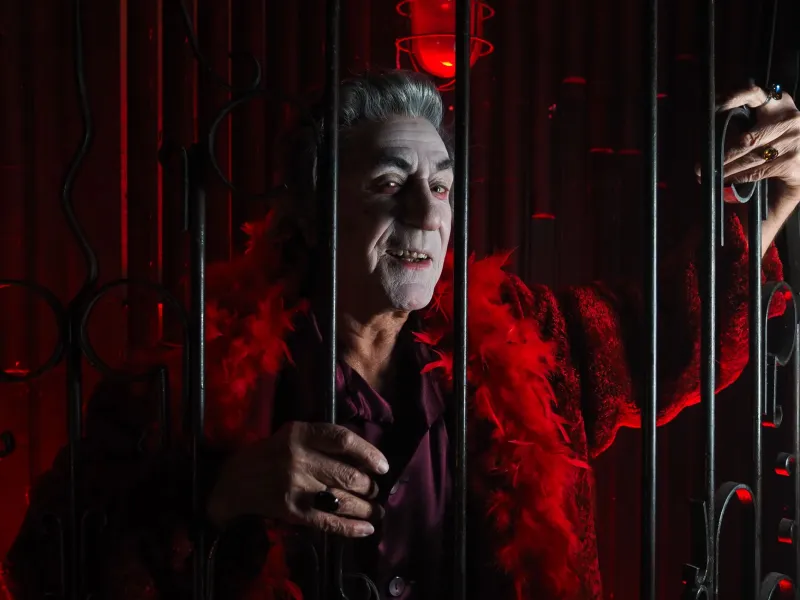
Let me paint you a picture. Your players have spent six sessions tracking down the dark lord. They finally corner him in his obsidian tower. He monologues about power and domination, they fight, he dies, everyone levels up. Roll credits.
Now let me paint you a different picture. Same six sessions, same tower. But when the villain finally speaks, one of your players goes quiet. Because he's not entirely wrong. Because the solution he chose is monstrous — but the problem he identified is real. And now killing him feels complicated.
That second campaign? That's the one people are still talking about at game night two years later.
Building that kind of villain isn't about excusing evil. It's about making evil make sense. And there's a massive difference.
The Problem With Pure Evil
The purely evil villain is a staple of fantasy for a reason — they're simple, they're satisfying to defeat, and they don't require a lot of maintenance. Sauron works in Lord of the Rings because Tolkien was writing myth, not a character study. But your tabletop campaign isn't myth. It's collaborative, interactive, and deeply personal to your specific players.
When players engage with a villain who's just evil, they're essentially fighting a weather event. You don't negotiate with a hurricane. You don't feel moral weight when you destroy one. The encounter becomes a skill check, not a story.
Moreover, pure evil is actually harder to make believable. Real humans — and by extension, believable fictional characters — almost never see themselves as the villain. They have reasons. They have grievances. They've built a story in their head where they're justified. That's what makes real-world antagonism so chilling, and it's what makes fictional antagonism so compelling when it's done right.
What "Valid Goals" Actually Means
Here's where GMs sometimes get nervous: giving a villain valid goals doesn't mean endorsing them. It means building internal logic.
Think about some of the most discussed antagonists in modern storytelling:
- Magneto (X-Men) wants to protect mutants from genocide. His methods are terroristic. His fear is historically grounded. He's right that humans have tried to destroy his people. He's wrong about almost everything he does about it.
- Killmonger (Black Panther) identifies a real injustice — the abandonment of oppressed people globally — and pursues it through violence and domination. His diagnosis isn't entirely wrong. His prescription is catastrophic.
- Jaime Lannister (before he became a hero) killed a king to prevent mass murder. He was right to do it. He did it for complicated reasons. Nobody thanked him.
For your TTRPG villain, the formula is similar: legitimate grievance + understandable motivation + deeply flawed execution. That's the triangle you're building inside.
Building the Motivation Stack
When you sit down to design your antagonist, don't start with their plan. Start with their wound.
What happened to this person (or creature, or faction) that brought them to this point? What did they lose, or what were they denied? What did they try first — before the evil plan — that didn't work?
Then ask: what do they actually want underneath the stated goal? Power is almost never the real answer. Power is a means. What's the end?
Here's a quick framework to work through:
Layer 1 — The Surface Goal: What are they actively trying to accomplish? (Conquer the kingdom, resurrect the dead god, destroy the merchant guild)
Layer 2 — The Stated Reason: What do they tell their followers, and maybe even themselves? (The kingdom is corrupt, the dead god will bring justice, the guild exploits the poor)
Layer 3 — The Real Wound: What actually drives them at the deepest level? (They were cast out, they lost someone they loved, they were humiliated and never recovered)
When players eventually discover Layer 3 — especially if they find it through roleplay rather than exposition — that's when the campaign becomes something special.
Give Them a Coherent World View
Your villain should be able to explain themselves. Not justify — explain. If you can't articulate their reasoning in a way that at least sounds internally consistent, your players won't be able to engage with them as a real presence in the world.
Write out, even just in your notes, a paragraph from the villain's perspective. Not what the heroes think of them — what they think of themselves. What do they believe they're saving? Who do they think is the real enemy? What would they say to the heroes if the heroes actually sat down and listened?
This exercise also helps you avoid the classic mistake of the villain who monologues but never actually communicates. A great villain can make a player say "okay but like... he has a point" before they catch themselves. That discomfort is gold.
Practical Implementation: Letting Players Find Out Slowly
One of the best tools in the complex-villain toolkit is information pacing. Don't reveal your villain's full backstory in session one. Let players encounter them through reputation first, then through proxies and lieutenants who clearly believe in the cause, then through the villain's own past via environmental storytelling and NPC accounts.
By the time players meet the antagonist face-to-face, they should already have questions about them — not just contempt.
Some practical moves:
- The Sympathetic Underling: One of the villain's followers genuinely believes in the cause and isn't a monster. Let players befriend them. It complicates everything.
- The Villain's Past Act of Mercy: Somewhere in the world, there's someone the villain protected or spared. Let players find that person.
- The Moment of Doubt: In a confrontation, let the villain hesitate — just for a second — before committing to the evil choice. Show them choosing it, not just being it.
The Hard Part: Keeping the Campaign on Track
The legitimate concern GMs have is that morally complex villains can derail things. What if players try to side with them? What if they want to redeem them instead of fight them?
Honest answer: let them try. Have a sense of where that road leads. Maybe the villain is too far gone and the players discover that through a tragic failed redemption arc. Maybe there's a genuine path to a different ending — and that's not a derailment, that's your players doing something extraordinary with the story you built together.
The key is making sure the villain's flawed execution remains genuinely harmful. Players should feel the cost of the villain's methods, even when they understand the motivation. That tension — I understand you, but I can't let you do this — is the beating heart of a truly great campaign.
Build Them Like a Person, Fight Them Like a Legend
At the end of the day, your villain is a character before they're an obstacle. Give them a voice, a history, a genuine belief in something. Make them someone who could have been a hero if things had gone differently — or if they'd made different choices.
When your players finally defeat them, you want that moment to feel like a tragedy and a triumph at once. You want someone at the table to maybe, just maybe, feel a little sad.
That's not a sign that your villain won. That's a sign that your story did.