More Than a Mascot: Building Companion NPCs Who Lie, Stumble, and Steal the Show
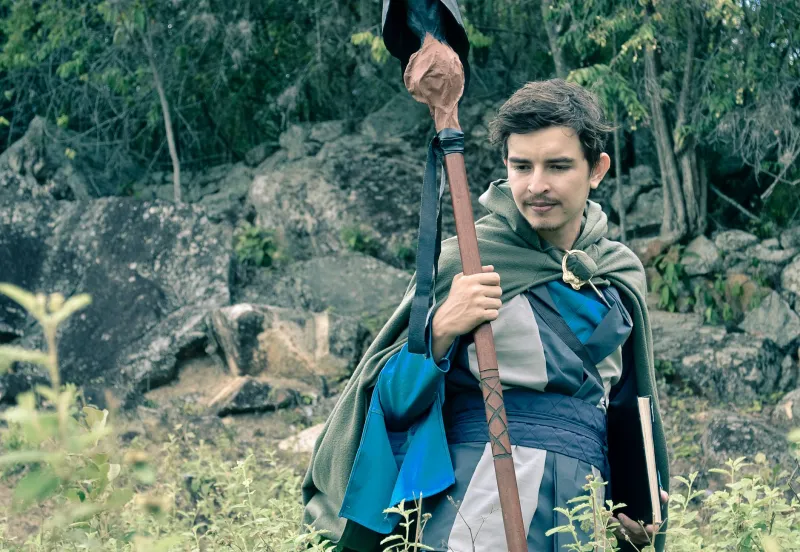
Every campaign has one. The friendly rogue who tags along after the party saves her from a prison wagon. The grizzled veteran who offers to guide the group through the mountain pass. The young cleric who latches onto the party because they're the first people who ever treated him like he mattered.
These characters start out useful. They hand over information, unlock doors, and occasionally stab someone in a pinch. But somewhere around session four, they fade into the background — showing up when the GM needs to deliver exposition and disappearing the rest of the time. By the end of the campaign, nobody remembers their name.
That's a waste. A well-built companion NPC isn't just a quest dispenser with a personality skin. They're one of the most powerful storytelling tools a GM has — if you actually treat them like a person.
Give Them a Problem That Has Nothing to Do With the Party
Here's the core mistake most GMs make with companion NPCs: they design these characters entirely in relation to the players. Their backstory exists to create plot hooks. Their personality exists to complement the group dynamic. Their loyalty exists to make the party feel heroic.
Flip that. Before you think about what this NPC offers the party, ask yourself what's already going wrong in their life.
Maybe your rogue companion is sending money back to a sick sibling in another city — and that money is starting to run dry. Maybe the veteran guide hasn't spoken to his estranged daughter in six years and the party's current destination is her hometown. Maybe the young cleric is secretly questioning his faith and terrified that if anyone finds out, he'll lose the only community he's ever had.
These problems don't need to dominate every session. But they should exist quietly in the background, surfacing at unexpected moments and shaping how the NPC responds to the events around them. A companion dealing with financial desperation is going to look at that merchant's unguarded strongbox very differently than a companion who isn't. That difference is what makes them feel real.
Let Them Be Bad at Things — Including Loyalty
We tend to design companion NPCs as competent, reliable, and fundamentally on the party's side. That's understandable. Players need to be able to trust their allies to some extent, or every interaction becomes exhausting.
But there's a lot of ground between "completely trustworthy" and "secret villain." The most interesting companions live in that middle space.
Let them make judgment calls that backfire. Let them misread a social situation and accidentally insult a potential ally. Let them get scared during a fight and hesitate at the worst possible moment. These aren't failures of character — they're character, full stop. People mess up. Sidekicks should too.
And when it comes to loyalty, consider giving your companion NPCs what you might call a competing allegiance. Not a secret evil master pulling their strings, but something more grounded: a family obligation that conflicts with the party's current goal, a personal code that draws a line the players are about to cross, a debt owed to someone who is very much not the party's friend.
When those competing loyalties come into tension with what the party needs, you've got genuine drama — the kind that doesn't require a dramatic betrayal reveal to land.
Design an Arc That the Party Doesn't Control
Player characters grow because players make choices. Companion NPCs should grow because life makes choices — including choices the party had no hand in.
Map out a rough arc for your companion before the campaign starts. Where are they emotionally at the beginning? What do they want for themselves? What would it take for them to change — for better or worse? Then let that arc unfold in parallel with the main story, intersecting with the players' journey without being entirely dependent on it.
Maybe your veteran guide starts the campaign closed off and cynical. If the party treats him with respect and he witnesses enough genuine heroism, he might soften over time — reconnecting with something he thought he'd lost. But if the party consistently makes choices he finds morally repugnant, that arc goes somewhere darker. He doesn't become a villain. He just becomes someone who quietly stops believing in what they're doing.
The key is that his journey is his. The party influences it, but they don't dictate it. That distinction is what separates a character from a prop.
Betrayal Doesn't Have to Mean Evil
If you do decide to have a companion NPC act against the party's interests, resist the urge to make it a mustache-twirling moment. The most gut-punch betrayals aren't the ones where the villain reveals they were never really on your side — they're the ones where someone you genuinely liked made a choice you understand, even if you hate it.
Imagine your young cleric companion, after months of travel with the party, discovers that the artifact they're trying to destroy is the only thing keeping his home village protected from a curse. He doesn't monologue. He doesn't gloat. He just takes it and runs — and when the party catches up to him, he's crying and he still thinks he did the right thing.
That's a story moment. That's the kind of thing players talk about years after the campaign ends.
The difference between a betrayal that feels cheap and one that lands is groundwork. If you've been building this character's competing motivations for months, his choice feels inevitable in retrospect. If it comes out of nowhere, it just feels like a GM gotcha.
Keep Them in the Room After the Drama
One last thing: don't let big NPC moments become exits. A lot of GMs use companion drama as a send-off — the NPC does something dramatic, the party reacts, and then that character is gone from the story.
But real relationships don't end after a single confrontation. If your companion NPC betrayed the party and then got forgiven, or got left behind, or made a terrible mistake and had to live with it — that person is still out there. They have feelings about what happened. The party has feelings about what happened.
Let that linger. Let there be awkwardness. Let there be a conversation three sessions later that nobody planned for but everyone needed. The companions who stick with players aren't the ones who were most useful — they're the ones who felt most human.
That's the goal. Not a better quest dispenser. A person your players actually miss when they're gone.